
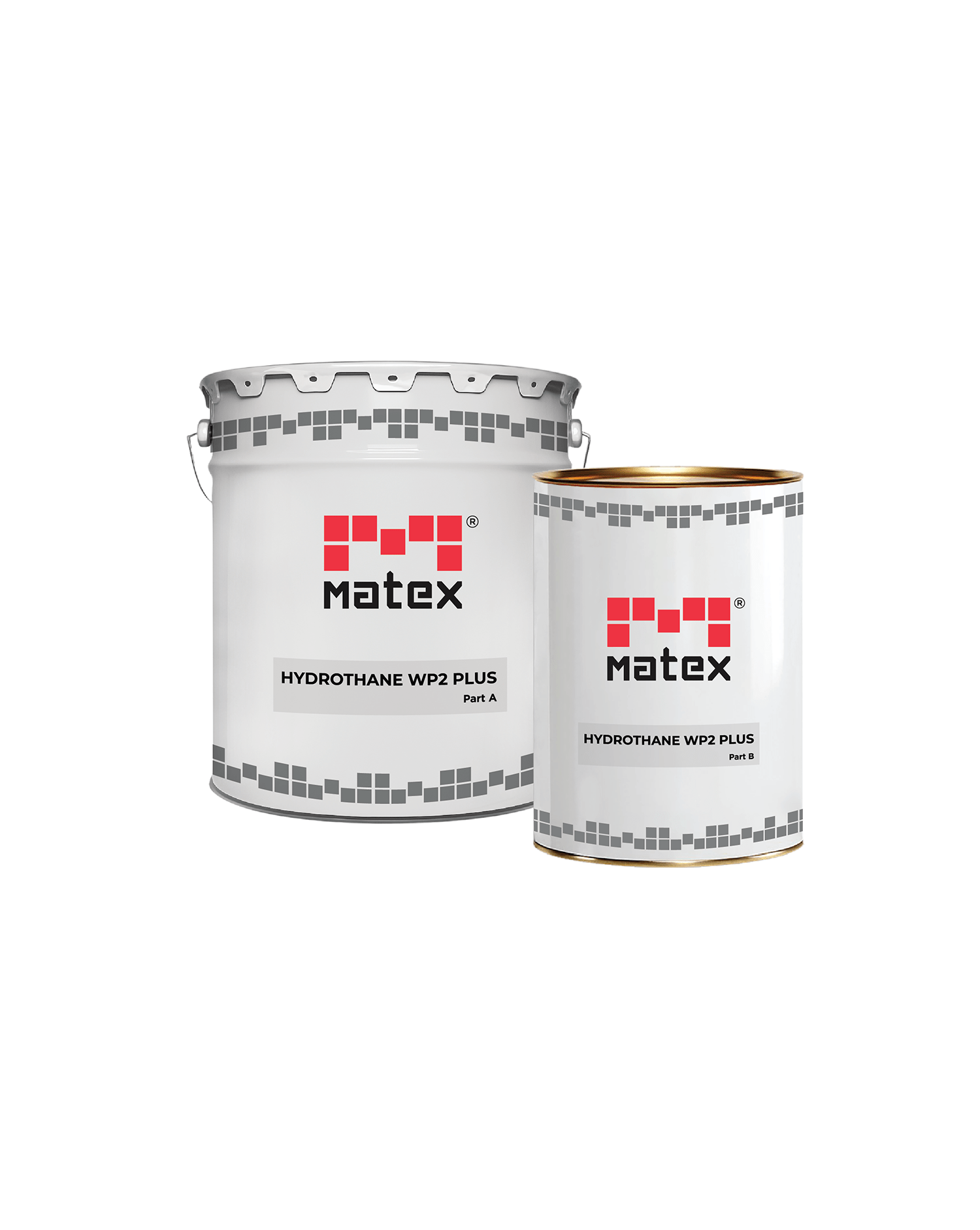
HYDROTHANE WP2 PLUS is a solvented, two-component, cold-applied elastomeric waterproofing membrane based on advanced polyurea resins, engineered for exceptional elasticity and durability. Free from coal tar, HYDROTHANE WP2 PLUS cures to form a high-density, seamless, continuous membrane offering outstanding chemical resistance and mechanical performance. It is ideal for waterproofing building structures such as foundations, kitchens, toilets, industrial wet areas, and for use as an intermediate waterproofing layer in car park systems. The product features fast chemical curing, high tensile strength and elongation, crack bridging capabilities, excellent adhesion to both new and existing substrates, and robust resistance to corrosion, mildew, frost, and harsh cleaning chemicals.
Hydrothane WP2 Plus is mixed on site and applied cold by brush, roller or airless spray in two coats over a prepared, pretreated substrate.
Summary of the method in the Hydrothane Wp2 Plus Technical Data Sheet. Always follow the full TDS on site.
| Standard | Title | Referenced for |
|---|---|---|
| ASTM C836 | Standard Specification for High Solids Content, Cold Liquid-Applied Elastomeric Waterproofing Membrane for Use with Separate Wearing Course | Crack bridging (up to 2 mm, no effect) |
| ASTM D412 | Standard Test Methods for Vulcanized Rubber and Thermoplastic Elastomers—Tension | Tensile strength (>7 N/mm²) and elongation (>700%) |
| ASTM D4541 | Standard Test Method for Pull-Off Strength of Coatings Using Portable Adhesion Testers | Adhesion to concrete (>2.0 N/mm²) |
| ASTM D2240 | Standard Test Method for Rubber Property—Durometer Hardness | Shore A hardness (65) |
| ASTM E96 | Standard Test Methods for Water Vapor Transmission of Materials | Water vapor transmission (0.3 g/h/m²) |
| ASTM D624 | Standard Test Method for Tear Strength of Conventional Vulcanized Rubber and Thermoplastic Elastomers | Tear strength – listed in TDS, no value given |
Standards and test methods as referenced in the Hydrothane Wp2 Plus Technical Data Sheet. Values in the TDS are typical laboratory results under standard conditions.
Coverage is 1.0 liter per m² at 1.0 mm thickness. Each coat is applied at 2.0 m² per liter, and below ground structures, wet areas and roofs need a minimum of 1.2 mm.
Pot life is 20–25 minutes at 25°C. Touch dry is >2 hours and full dry is 3–4 hours; water tests should be run only after full cure, minimum 7 days.
The TDS states it is not designed to be exposed in external applications. Where it will be fully exposed to sun and atmosphere, apply Hydrothane A100 as a protective layer on top after curing.
The application/service temperature is +5°C to +40°C. It should not be applied below 5°C, with imminent rain, or on surfaces with a risk of rising dampness.
Yes. It can be used as an intermediate waterproofing membrane in car park deck systems; broadcasting quartz improves the grip of subsequent polyurethane layers, but reduces flexibility.