
MATEX
Quick Contact
X

    Navigation
    Close menu
    Theme Color
    Light Dark

    Waterproofing

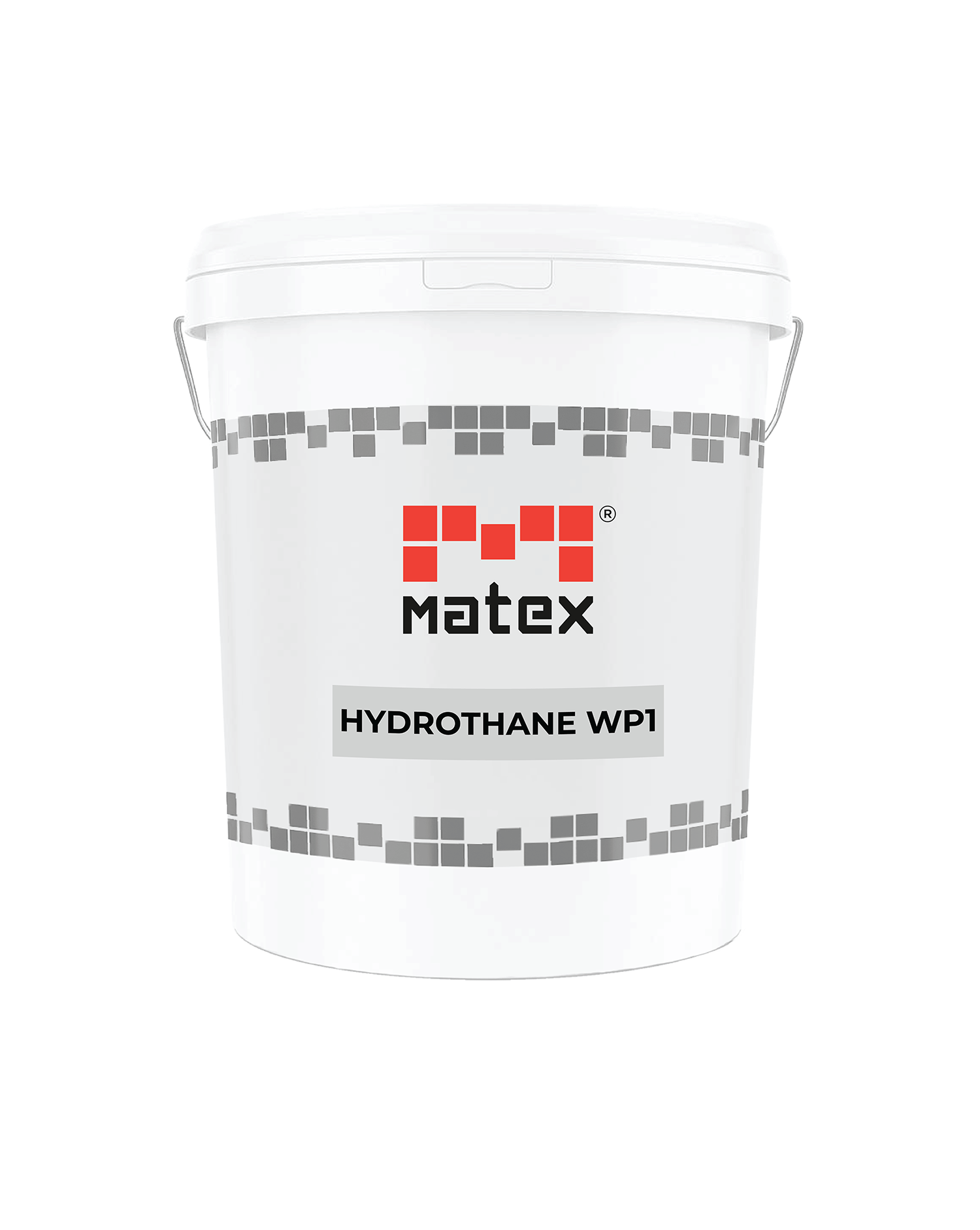
    Hydrothane WP1 single component elastomeric polyurethane waterproofing membrane by MATEX

    Hydrothane Wp1

    Elastomeric Single Component Polyurethane Waterproofing Membrane

    HYDROTHANE WP1 is a high-build, single-component, moisture-cured elastomeric waterproofing membrane based on polyurethane resins, formulated without pitch for environmentally friendly applications. Designed for long-term, maintenance-free protection, HYDROTHANE WP1 cures to form a seamless, flexible membrane ideal for foundations, kitchens, toilets, and industrial wet areas. It offers outstanding crack-bridging ability, excellent chemical resistance to detergents, cleaning materials, brackish and saltwater, and high durability under mechanical stress. Fast drying and low odor, it self-primes to substrates without the need for primers and performs exceptionally where structural movements are expected. Its high-build application and superior waterproofing performance make it a reliable choice for demanding environments.


    Technical data:
    • Color : white or grey liquid coating
    • Touch dry : 12 hours
    • Full dry : 7 days
    • Service Temperature : -5°C to 80°C
    • Coverage : 1.4 liter per 1m² @ 1mm thickness
    • Packaging : 15 lit pail

    How to Apply Hydrothane Wp1

    Hydrothane WP1 is a single component, moisture cured membrane applied in two coats by squeegee, trowel, brush, roller or airless spray over a prepared, dry substrate.

    1. Prepare the surface. The surface must be sound, clean, dry and free from loose and flaking material, efflorescence, laitance, curing compounds, dirt, oil, rust and grease, with projections and rough spots dressed off. Concrete should be cured for at least 28 days with moisture content below 5%; use grinding or grit captive blasting on deeply contaminated or old surfaces.
    2. Treat cracks, corners, joints and metal. Fill non-moving cracks under 1.0 mm with a pretreatment strip of Hydrothane WP1 at least 1.0 mm thick, extended 50 mm each side; form coving fillets at corners with Lavarep F40 and apply a 1.0 mm reinforcing strip extending 100 mm each side. Seal expansion joints with Megaseal PU1, then apply a 200 mm wide strip of Hydrothane WP1 with fiber mesh embedded and let it cure. Sandblast or mechanically prepare metal to white metal and coat it directly.
    3. Prime porous surfaces if needed. Well-prepared surfaces usually need no primer. For porous surfaces, apply a coat of Hydrothane WP1 thinned 10% with Armosolvent as a primer.
    4. Mix. Shake the drum well to mix any settled material, or mix with a slow speed mixer to get a homogeneous mixture and uniform color.
    5. Apply two coats. Apply the first coat at 0.6 liter per m² using a squeegee or trowel and back roll with a roller. Apply the second coat at the same rate at right angles to the first, only once the first coat is completely dry; in below ground structures, wet areas and roofs the minimum thickness should not be less than 1.0 mm.
    6. Finish for toppings. For tile flooring, spread silica sand onto the final wet coat for a mechanical key; in car park systems, broadcasting quartz improves grip for subsequent polyurethane layers but reduces membrane flexibility. If the membrane will be fully exposed to sun, apply Armofloor UVR on top after curing.
    7. Cure and protect. Cure the membrane for at least 24 hours before placing protection and do not leave it exposed for long periods. Run the water test only after full cure.
    8. Clean tools. Clean all tools with Armosolvent before the product hardens. Hardened material can only be removed mechanically.

    Summary of the method in the Hydrothane Wp1 Technical Data Sheet. Always follow the full TDS on site.

    Standards & Test Methods

    StandardTitleReferenced for
    ASTM D2240Standard Test Method for Rubber Property—Durometer HardnessShore A hardness
    ASTM C836Standard Specification for High Solids Content, Cold Liquid-Applied Elastomeric Waterproofing Membrane for Use with Separate Wearing CourseCrack bridging (passed 2 mm, no loss of bond)
    ASTM D412Standard Test Methods for Vulcanized Rubber and Thermoplastic Elastomers—TensionElongation
    ASTM D624Standard Test Method for Tear Strength of Conventional Vulcanized Rubber and Thermoplastic ElastomersTear resistance

    Standards and test methods as referenced in the Hydrothane Wp1 Technical Data Sheet. Values in the TDS are typical laboratory results under standard conditions.

    Frequently Asked Questions

    What is the coverage of Hydrothane WP1?

    Hydrothane WP1 covers 1.4 liter per m² per mm of thickness. This is approximate and depends on site conditions.

    How many coats of Hydrothane WP1 are needed?

    Two coats are applied, each at 0.6 liter per m², with the second applied at right angles once the first is completely dry. In below ground structures, wet areas and roofs the minimum thickness should not be less than 1.0 mm.

    How long does Hydrothane WP1 take to dry?

    It is touch dry in 12 hours and fully cured in 7 days at 25°C. The membrane must cure for at least 24 hours before protection is placed.

    Can Hydrothane WP1 be used in car parks and exposed areas?

    Yes, it can serve as the flexible intermediate membrane in multi-storey car park deck systems. If fully exposed to sun and atmosphere, it must be top-coated with Armofloor UVR after curing.

    What is the shelf life of Hydrothane WP1?

    It can be used within 6 months of production when stored unopened in original packing, dry, out of direct sunlight, at +5°C to +30°C. Once opened, use the contents completely, as skinning forms on remaining material.

    Quick Contact