
MATEX
Quick Contact
X

    Navigation
    Close menu
    Theme Color
    Light Dark

    Waterproofing

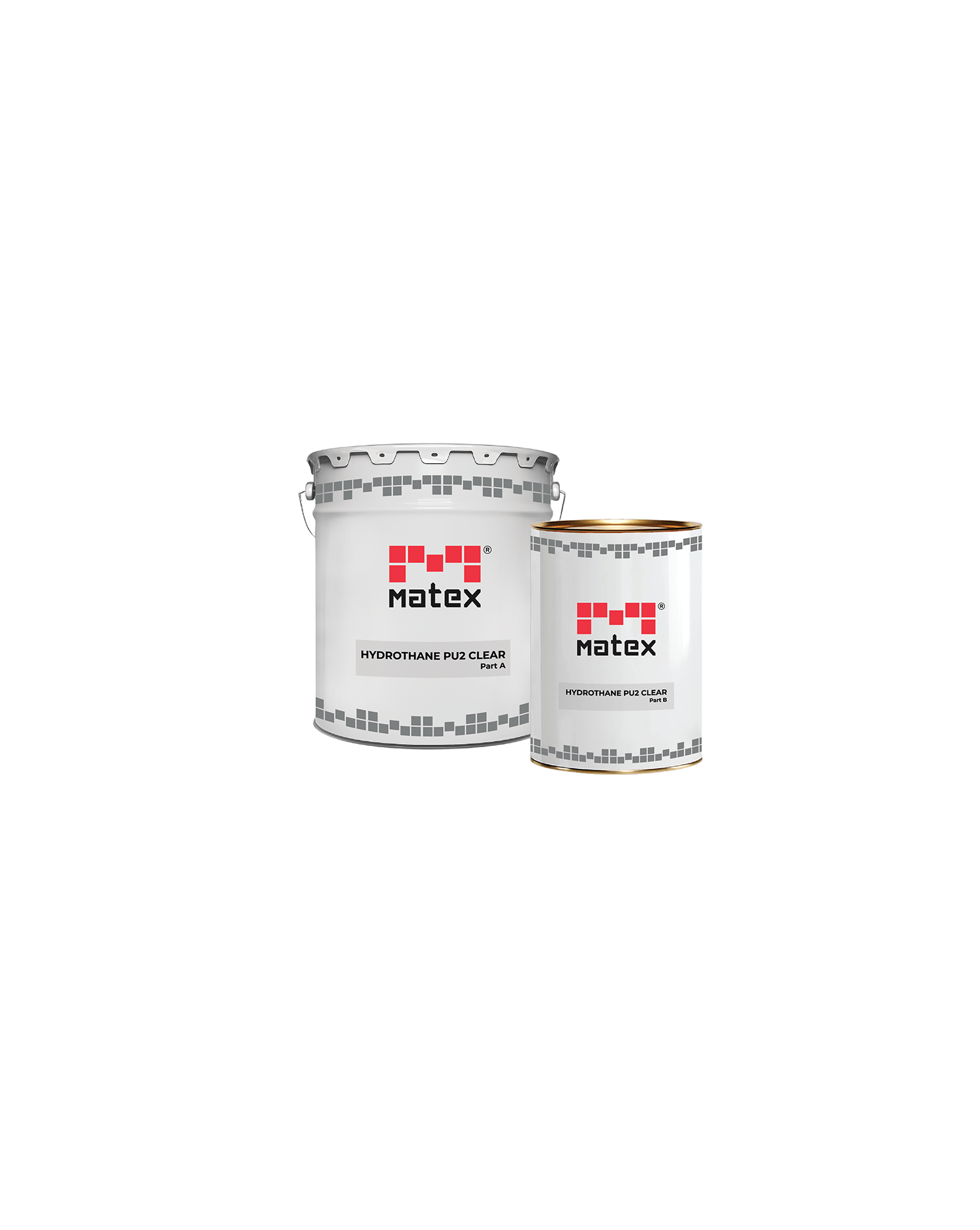
    Hydrothane PU2 Clear two-part polyurethane clear waterproofing membrane by MATEX

    Hydrothane PU2 Clear

    Elastomeric Two-Part Polyurethane Clear Waterproofing Membrane

    HYDROTHANE PU2 CLEAR is a solvent-free, high-build, two-component liquid-applied clear waterproofing membrane based on aromatic polyurethane resins, designed for maximum elasticity and durability. Once cured through chemical reaction, HYDROTHANE PU2 CLEAR forms a dense, seamless, continuous membrane with excellent adhesion to concrete, plaster, masonry, metal, and wood. It delivers superior crack-bridging ability, chemical resistance to detergents, cleaning agents, and saltwater, and outstanding mechanical properties. Highly flexible to accommodate structural movement, it is ideal for preserving substrate appearance while providing high-performance waterproofing. Fast drying, with strong bonding to new and existing surfaces, it ensures long-term impermeable protection in demanding environments.


    Technical data:
    • Color/Appearance : clear liquid
    • Application Temperature : 5°C to 40°C
    • Touch dry : 24 hours
    • Full dry : 7 days
    • Coverage : 1 liter / 1m² @ 1 mm thickness
    • Packaging : 4 & 15 lit kit

    How to Apply Hydrothane PU2 Clear

    Hydrothane PU2 Clear is a two-part membrane for experienced professionals, applied in two coats or one thick 500 micron coat over a prepared substrate.

    1. Prepare the surface. The surface should be sound, clean, dry and free from loose and flaking material, efflorescence, laitance, curing compounds, dirt, oil, rust and grease, with projections and rough spots dressed off level. Concrete should be cured for at least 28 days with moisture content below 5%; use grinding or grit/captive blasting for deep contamination or old surfaces. Metal should be blasted or mechanically prepared to bright steel and coated directly.
    2. Repair and detail joints. Repair shrinkage and non-moving cracks and patch voids and honeycombs with concrete repair products, letting them cure first. Seal expansion joints with Megaseal PU1, then apply a 200 mm strip centered over the joint with fiber mesh embedded and overcoated.
    3. Prime porous substrates. On porous substrates, apply a rich coat of high-performance epoxy primer to improve mechanical adhesion.
    4. Mix. Mix component A (base) with a low speed mixer for one minute, slowly add part B (hardener) and mix with a suitable paddle for 3–4 minutes to a homogeneous, lump-free mix. Avoid over mixing; mixing is exothermic, and do not mix more than can be used within the 20 minute pot life.
    5. Apply. Apply by trowel, squeegee, brush, roller or airless spray in two coats or one thick coat of 500 micron. Apply the second coat only once the first is completely dry, and add an extra strip around pipes and conduits in wet areas. Apply during falling temperature and check thickness with a gauge to avoid blistering.
    6. Cure and test. Touch dry is 24 hours and full dry 7 days. Further toppings can be applied once fully cured, and water tests should be run after a minimum of 7 days.
    7. Clean tools. Clean all tools with Armosolvent before the product hardens. Hardened material can only be removed mechanically.

    Summary of the method in the Hydrothane PU2 Clear Technical Data Sheet. Always follow the full TDS on site.

    Standards & Test Methods

    StandardTitleReferenced for
    ASTM D412Standard Test Methods for Vulcanized Rubber and Thermoplastic Elastomers—TensionTensile strength (>5 N/mm²), elongation (above 200%), modulus (>2 N/mm²), recovery from 100% extension (97%)
    ASTM D624Standard Test Method for Tear Strength of Conventional Vulcanized Rubber and Thermoplastic ElastomersTear resistance (11 N/mm)
    ASTM D4541Standard Test Method for Pull-Off Strength of Coatings Using Portable Adhesion TestersAdhesion to concrete (2.5 N/mm²)
    ASTM D2240Standard Test Method for Rubber Property—Durometer HardnessShore A hardness (73)
    ASTM E96Standard Test Methods for Water Vapor Transmission of MaterialsWater vapor transmission (0.3 g/h/m²)
    ASTM C1305Standard Test Method for Crack Bridging Ability of Liquid-Applied Waterproofing MembraneCrack bridging (up to 2 mm, no effect)
    EN 12390-8Testing hardened concrete — Depth of penetration of water under pressureWater impermeability (impermeable)
    ASTM C836Standard Specification for High Solids Content, Cold Liquid-Applied Elastomeric Waterproofing Membrane for Use with Separate Wearing CourseListed in the TDS

    Standards and test methods as referenced in the Hydrothane PU2 Clear Technical Data Sheet. Values in the TDS are typical laboratory results under standard conditions.

    Frequently Asked Questions

    What is Hydrothane PU2 Clear used for?

    It is a clear waterproofing membrane for building structures where high flexibility and chemical resistance are needed and the substrate texture or look must be kept. The TDS states it should be used only by experienced professionals.

    What is the coverage of Hydrothane PU2 Clear?

    Coverage is 1.0 liter per m² at 1.0 mm wet film thickness. Apply two coats or one thick coat of 500 micron.

    How long does Hydrothane PU2 Clear take to dry?

    Pot life is 20 minutes at 25°C, touch dry is 24 hours and full dry is 7 days. Water tests should be run after a minimum of 7 days.

    What conditions are needed to apply Hydrothane PU2 Clear?

    Application temperature is +5°C to +40°C, with relative humidity above 50% and no more than 85%. Do not apply with imminent rain or on surfaces with a risk of rising dampness.

    Does Hydrothane PU2 Clear stay clear outdoors?

    The TDS notes it will slightly change in color clarity if applied externally.

    Quick Contact