MATEX
Quick Contact
X

    Navigation
    Close menu
    Theme Color
    Light Dark

    Waterproofing

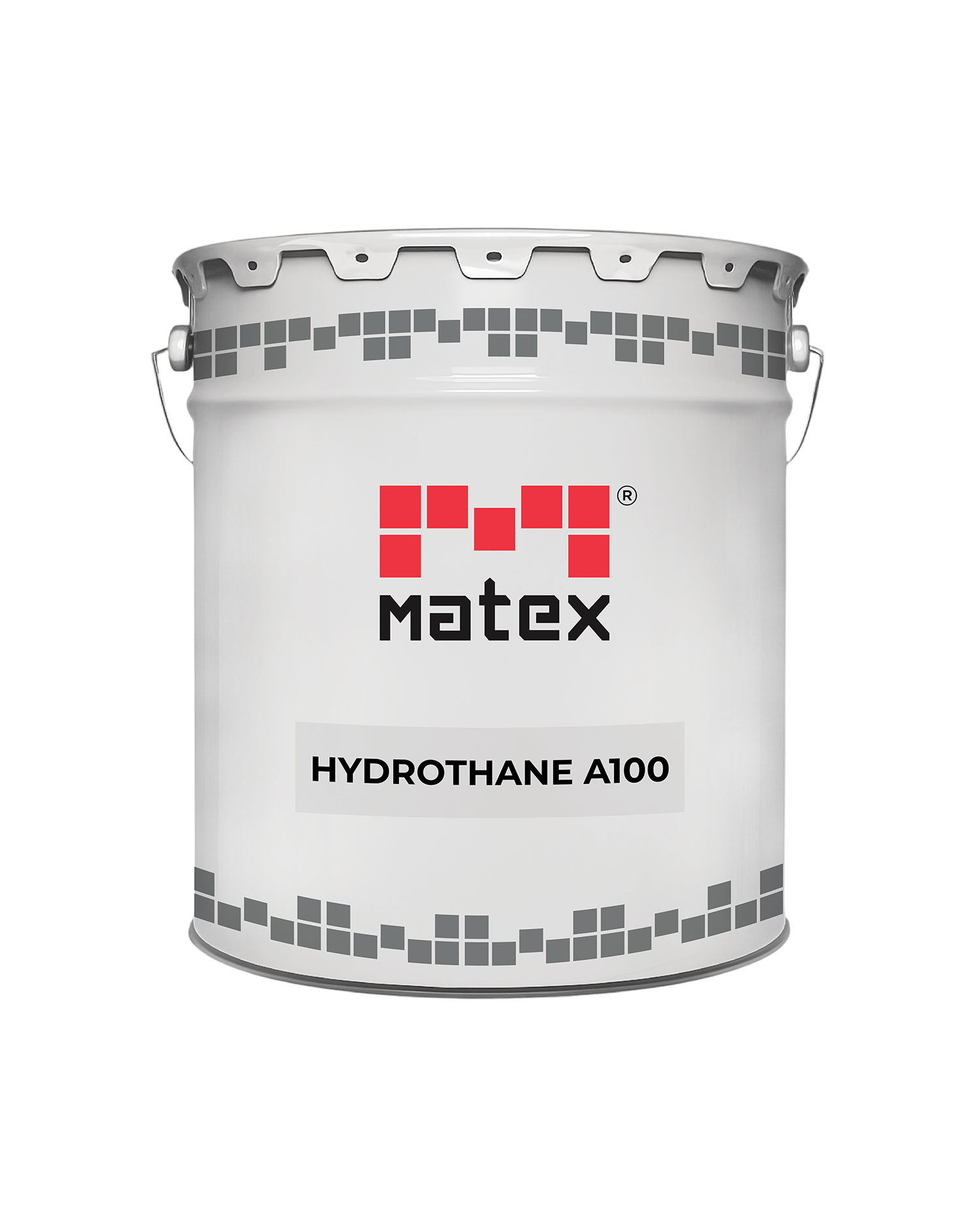
    Hydrothane A100 single component aliphatic polyurethane UV resistant waterproofing membrane by MATEX

    Hydrothane A100

    Single Component Aliphatic Polyurethane Waterproofing Membrane

    HYDROTHANE A100 is a single-component, liquid-applied, elastomeric aliphatic polyurethane waterproofing membrane that cures with atmospheric moisture to form a highly elastic, UV-stable coating. It delivers seamless, impermeable protection with excellent crack-bridging and mechanical properties, ideal for foundations, wet processing areas, swimming pools, and more. HYDROTHANE A100 offers high build in a single application, outstanding durability, abrasion resistance, and corrosion protection. It withstands extreme weather conditions, remains mildew-proof and frost-resistant, and is highly flexible for areas subject to movement. Low-odor, tar-free, and suitable for both new and old substrates, it ensures long-term, maintenance-free waterproofing performance.


    Technical data:
    • Color/Appearance : liquid: white/grey (other color upon request)
    • Initial cure : 24 hours @ 35°C
    • Full cure : 7 days @ 35°C
    • Application Temperature : 5°C to 35°C
    • Service Temperature : -5°C to 80°C
    • Coverage : 1 liter / 1 m² / 1 mm
    • Packaging : 4 & 15 lit pail

    How to Apply Hydrothane A100

    Hydrothane A100 is applied by brush or roller in two coats over a primed substrate, or as a single 250 micron top coat over another liquid membrane.

    1. Prepare the surface. The surface should be sound, clean, dry and free from loose and flaking material, efflorescence, laitance, curing compounds, dirt, oil, rust and grease, with moisture content below 5%. Use grinding or grit/captive blasting for deep contamination or old surfaces. Metal should be blasted or mechanically prepared to bright steel and coated directly.
    2. Pretreat cracks, corners and joints. Fill non-moving cracks under 1.0 mm with a 1.0 mm strip of Hydrothane A100 extending 75 mm each side. Form 45° coving fillets with Lavarep F40 and apply a 1 mm reinforcing strip extending 150 mm each side. Seal expansion joints with Megaseal PU1, then apply a 200 mm strip centered over the joint with fiber mesh embedded and overcoated.
    3. Prime. Apply Armoprime EP100 at approx. 0.15–0.2 kg/m² depending on porosity (also for metal and non-porous substrates), without leaving excess fluid. Allow the primer to dry for at least 24 hours.
    4. Mix. Mix the pail thoroughly with a paddle mixer fitted to a slow speed drill until uniform, then leave for 2 minutes to release entrapped air.
    5. Apply two coats. Apply by brush or roller in two coats to a minimum dry film thickness of 1.0 mm. Apply the second coat at right angles to the first once the first is completely dry, but before 48 hours. As a top coat over another liquid membrane, apply one coat at 250 microns.
    6. Protect and finish. Cure for a minimum of 24 hours before placing protection, and do not leave the membrane exposed to mechanical damage for long periods. For tiles, broadcast silica sand into the final wet coat; in car parks, broadcast quartz for grip of subsequent polyurethane layers.
    7. Test and clean. Run water tests only after full cure (minimum 7 days). Clean tools and equipment with Armosolvent immediately after use.

    Summary of the method in the Hydrothane A100 Technical Data Sheet. Always follow the full TDS on site.

    Standards & Test Methods

    StandardTitleReferenced for
    ASTM D412Standard Test Methods for Vulcanized Rubber and Thermoplastic Elastomers—TensionTensile strength (8 N/mm²) and elongation (>600%)
    ASTM D624Standard Test Method for Tear Strength of Conventional Vulcanized Rubber and Thermoplastic ElastomersTear strength (15 N/mm²)
    ASTM C836Standard Specification for High Solids Content, Cold Liquid-Applied Elastomeric Waterproofing Membrane for Use with Separate Wearing CourseCrack bridging (2.5 mm)
    ASTM D4541Standard Test Method for Pull-Off Strength of Coatings Using Portable Adhesion TestersAdhesion to concrete (>2.0 N/mm²)
    ASTM D2240Standard Test Method for Rubber Property—Durometer HardnessShore A hardness (60)
    ASTM E96Standard Test Methods for Water Vapor Transmission of MaterialsWater vapor transmission – listed in TDS, no value given

    Standards and test methods as referenced in the Hydrothane A100 Technical Data Sheet. Values in the TDS are typical laboratory results under standard conditions.

    Frequently Asked Questions

    Is Hydrothane A100 UV resistant?

    Yes. It is an aliphatic polyurethane that cures with atmospheric moisture to a UV stable membrane. It can be used as a top coat in liquid applied membrane systems at 250 microns.

    What is the coverage of Hydrothane A100?

    Coverage is 1.0 liter per m² per mm. As a membrane it is applied in two coats to a minimum dry film thickness of 1.0 mm.

    How long does Hydrothane A100 take to cure?

    Initial cure is 24 hours and full cure 7 days at 35°C. Apply the second coat once the first is completely dry but before 48 hours, and water test only after a minimum of 7 days.

    What are the application and service temperatures of Hydrothane A100?

    Application temperature is +5°C to +35°C and service temperature is -5°C to +80°C. On exposed roofs and walls, apply in early mornings or evenings when temperatures are low.

    What surfaces can Hydrothane A100 be applied to?

    The TDS lists tiles, concrete, cement roof tiles, wood and galvanized steel. Porous surfaces such as blocks, cement boards and lean cement/sand screed must be primed first.

    Quick Contact