
MATEX
Quick Contact
X

    Navigation
    Close menu
    Theme Color
    Light Dark

    Waterproofing

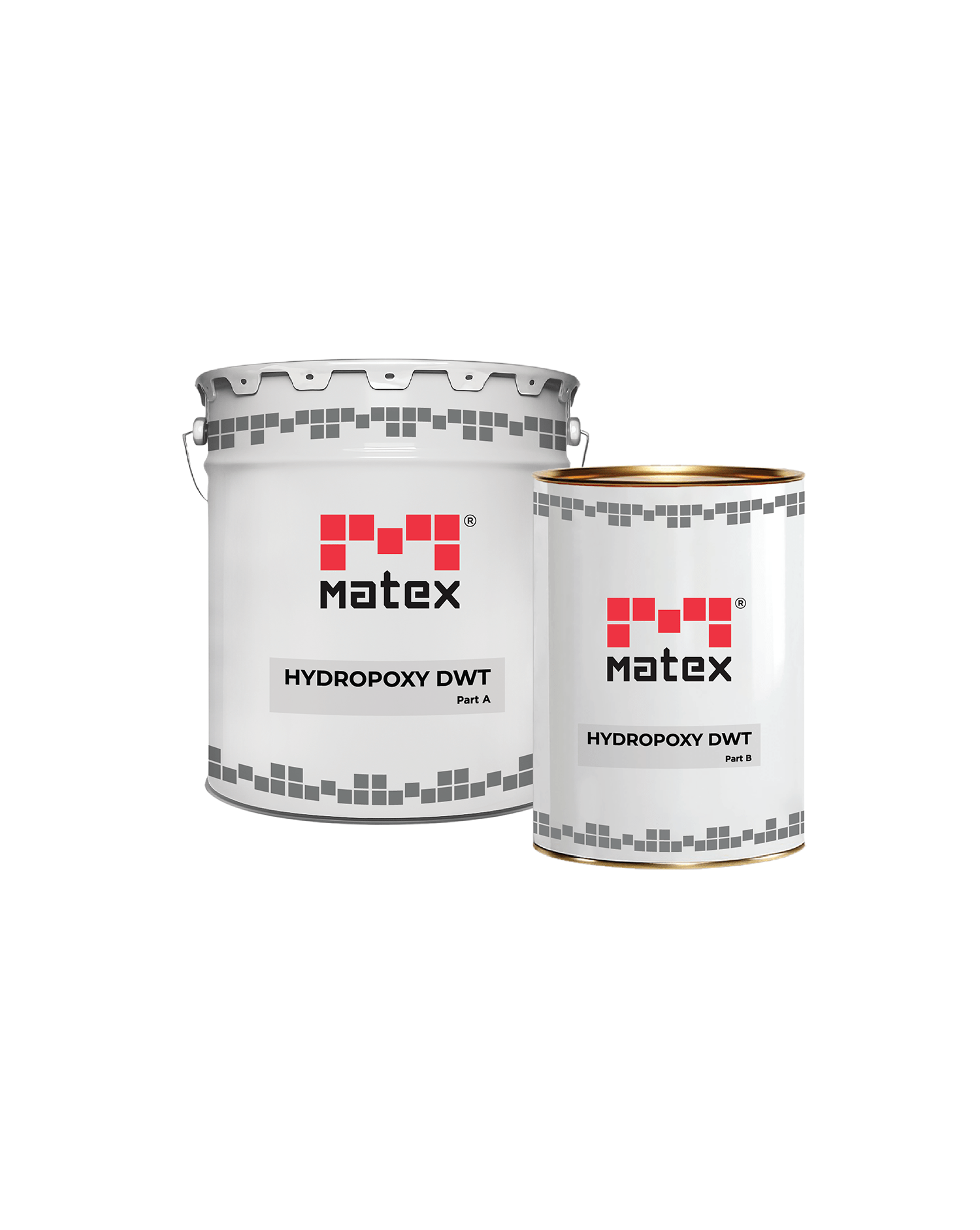
    Hydropoxy DWT solvent free epoxy waterproofing coating for potable water tanks by MATEX

    Hydropoxy Dwt

    Solvent Free Epoxy Waterproofing for Potable Water Tanks

    HYDROPOXY DWT is a two-component, solvent-free epoxy waterproofing and protective coating designed for concrete and steel surfaces in potable water applications. It forms a smooth, tough, non-toxic film that is highly resistant to corrosion, chemical attack, and abrasion. HYDROPOXY DWT is VOC-free, odorless, and designed for use with potable water and foodstuff storage. It is compatible with a wide range of substrates and can be applied directly onto mild steel or concrete. The cured coating provides a glossy, easy-to-clean surface without metallic particles. Supplied in pre-measured units, it ensures simple on-site mixing and efficient application, offering durable and safe protection.


    Technical data:
    • Color/Appearance : blue, grey liquid (others, upon request)
    • Potlife : 30 minutes @ 25°C
    • Application Temperature : 5°C to 40°C
    • Overcoating time : 16 – 24 hours
    • Full cure : 7 days
    • Coverage : 1 liter / 1m² / 1mm thickness
    • Packaging : 4 & 15 lit kit

    How to Apply Hydropoxy Dwt

    Hydropoxy DWT is applied over a mechanically prepared, primed surface in a minimum of two coats.

    1. Prepare the surface. Surfaces must be sound, clean, dry and free from loose material, efflorescence, laitance, curing compounds, dirt, oil and grease, and concrete must be cured for at least 28 days. Sand blast or mechanically prepare the surface to give a proper mechanical grip.
    2. Repair defects. Fill blowholes and imperfections with Lavapoxy Finish, allow to harden, then sand or grind back if required. Fill static cracks with repair materials, or inject penetrating cracks, before applying the liner.
    3. Prime. Apply a rich coat of Armoprime EP100 epoxy primer at a spread rate of 6–8 m² per liter to seal the surface.
    4. Mix. Stir Part A (base) with a low-speed mixer (200–300 rpm) for a minute, add Part B (hardener) and mix slowly for 2–3 minutes until homogeneous. Leave the mix for 2 minutes to release entrapped air.
    5. Apply the coats. Apply by roller, trowel, brush or spray at 4 m²/liter/coat, with subsequent coats at the same rate, preferably at 90 degrees to the previous coat. A minimum of two coats with a total thickness over 500 microns is required; overcoating time is 16–24 hours.
    6. Detail joints and penetrations. Apply an additional strip of product around pipes and conduits. For expansion joints, coat the inner edges with Hydropoxy DWT, then fill with Megaseal PU1; Hydrojoint Tape is recommended on sealed joints, pipe penetrations and tank angles.
    7. Cure before water testing. Full cure is 7 days. Run any water test only after 14 days from application.
    8. Clean tools. Clean tools with Armosolvent before the product hardens. Hardened material can only be removed mechanically.

    Summary of the method in the Hydropoxy Dwt Technical Data Sheet. Always follow the full TDS on site.

    Standards & Test Methods

    StandardTitleReferenced for
    ASTM D4541Standard Test Method for Pull-Off Strength of Coatings Using Portable Adhesion TestersAdhesion to concrete (greater than concrete cohesion)
    ASTM D2240Standard Test Method for Rubber Property—Durometer HardnessDurometer (Shore) hardness – listed in TDS, no value given
    ASTM C579Standard Test Methods for Compressive Strength of Chemical-Resistant Mortars, Grouts, Monolithic Surfacings, and Polymer ConcretesCompressive strength of chemical-resistant resin materials – listed in TDS, no value given
    ASTM C580Standard Test Method for Flexural Strength and Modulus of Elasticity of Chemical-Resistant Mortars, Grouts, Monolithic Surfacings, and Polymer ConcretesFlexural strength of chemical-resistant resin materials – listed in TDS, no value given
    BS 6920Suitability of non-metallic materials and products for use in contact with water intended for human consumption with regard to their effect on the quality of the waterSuitability of non-metallic products for contact with potable water – listed in TDS, no result given

    Standards and test methods as referenced in the Hydropoxy Dwt Technical Data Sheet. Values in the TDS are typical laboratory results under standard conditions.

    Frequently Asked Questions

    Can Hydropoxy DWT be used in potable water tanks?

    Yes. The TDS describes Hydropoxy DWT as designed for lining and waterproofing potable water retaining structures and surfaces in contact with foodstuffs, and states it is approved for potable water and foodstuff storage. Water tests should be run only after 14 days.

    What is the coverage of Hydropoxy DWT?

    Coverage is 1 liter per m² at 1 mm dry film thickness. Each coat is applied at 4 m²/liter, with a minimum of two coats over 500 microns total.

    What is the pot life and overcoating time of Hydropoxy DWT?

    Pot life is 30 minutes at 25°C. Overcoating time is 16–24 hours and full cure is 7 days.

    What temperature can Hydropoxy DWT be applied at?

    Application temperature is +5°C to +40°C. It should not be applied below 5°C or on surfaces with a risk of rising dampness.

    What packaging and shelf life does Hydropoxy DWT have?

    It is supplied in 4 and 15 liter sets in metal dual packs. Shelf life is 12 months from production in unopened original packing stored at +15°C to 25°C, dry and away from direct sunlight.

    Quick Contact