MATEX
Quick Contact
X

    Navigation
    Close menu
    Theme Color
    Light Dark

    Waterproofing

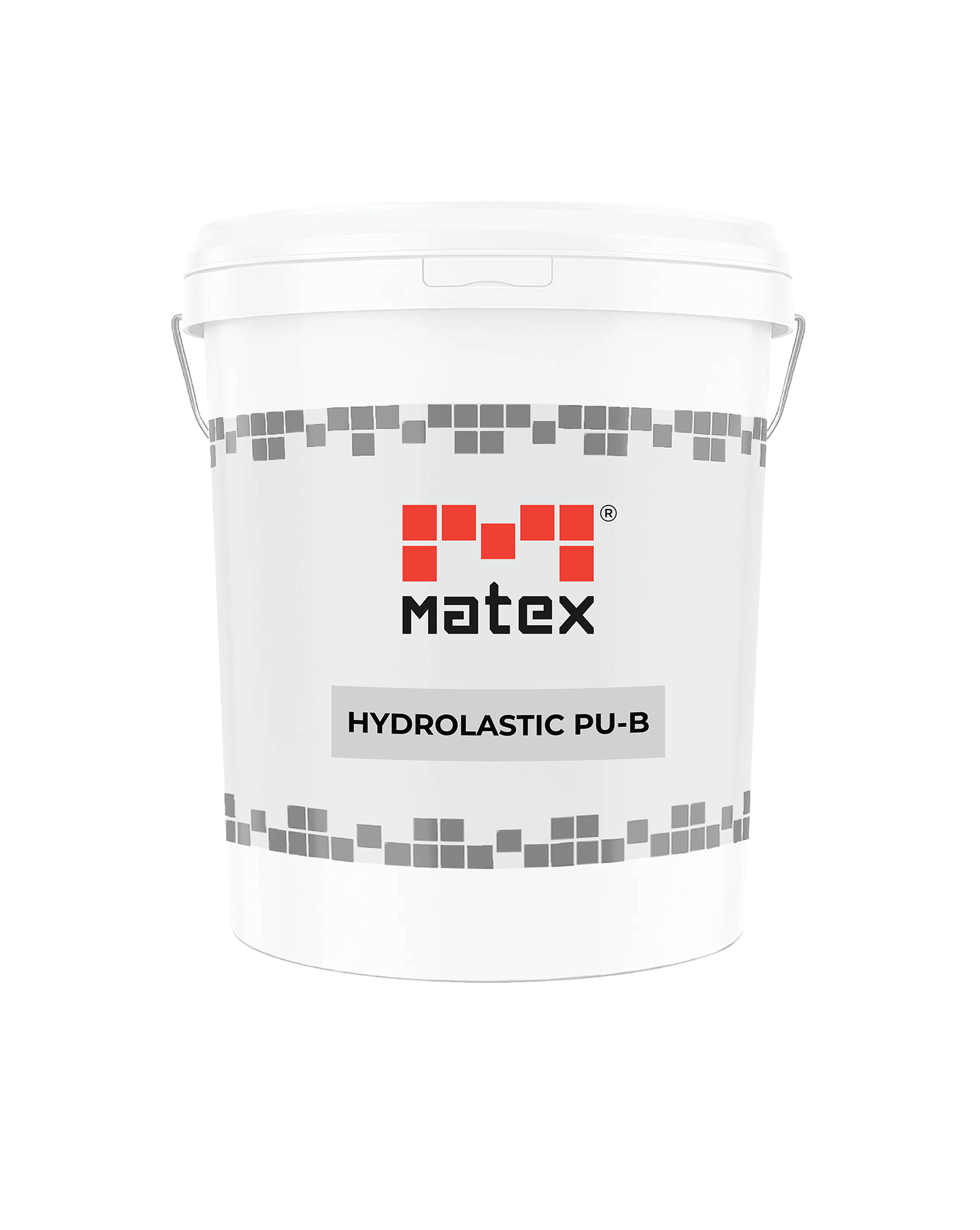
    Hydrolastic PU-B water based bitumen extended polyurethane liquid waterproofing membrane by MATEX

    Hydrolastic Pu-b

    Single Component Water Based Bitumen Extended Polyurethane Liquid Waterproofing Membrane

    HYDROLASTIC PU-B is a water-based, cold-applied, single-component waterproofing membrane made from modified polyurethane dispersion extended with bitumen. It cures into a seamless, highly flexible monolithic membrane with excellent adhesion to concrete, plaster, masonry, bituminous felts, metal, and more. HYDROLASTIC PU-B is VOC-free, environmentally friendly, and odorless, making it ideal for both new construction and maintenance projects. It offers strong resistance to chloride and sulphate attacks, excellent corrosion protection, and high puncture and impact resistance. With easy paintable application, it withstands groundwater aggression and harsh site conditions. LEED eligibility further supports its sustainable and energy-efficient project contribution.


    Technical data:
    • Color : black liquid coating
    • Application temperature : 5°C to 40°C
    • Service Temperature : -20°C to 70°C
    • Touch Dry : 12 hours
    • Full Dry : 7 days
    • Coverage : 1.7 kg/m² @ 1.0 mm thickness
    • Packaging : 20 kg plastic pail

    How to Apply Hydrolastic Pu-b

    Hydrolastic PU-B is a single component membrane applied cold by roller, trowel, brush or spray after crack, corner and joint pretreatment.

    1. Prepare the surface. The surface should be cured, sound, clean, dry and free from loose and flaking material, efflorescence, laitance, curing compounds, dirt, oil, rust and grease. Remove deep contamination by grinding or grit captive blasting. Metal surfaces should be blasted or mechanically prepared to bright steel and coated directly.
    2. Pretreat cracks and corners. Fill shrinkage and non-moving cracks under 1.0 mm with a pretreatment strip of Hydrolastic PU-B not less than 0.5 mm thick, extending 50 mm each side. Form 45° coving fillets at parapets and columns with Lavarep F40 and apply a 250 micron reinforcing strip extending 100 mm each side.
    3. Treat expansion joints. Seal expansion joints with Megaseal PU polyurethane sealant. Once cured, apply a 200 mm wide strip of Hydrolastic PU-B centered over the joint, embed fiber mesh while wet, overcoat until fully covered and let it cure before further coats.
    4. Prime if needed. Well-prepared surfaces usually need no primer. On porous surfaces apply a coat of Hydrolastic PU-B thinned 30% with water as a primer.
    5. Mix. Mix the contents of the pail with a slow speed mixer to a homogeneous mix.
    6. Apply the coats. For wet areas apply a minimum of two coats to reach 1 mm dry film thickness. By roller or brush, apply the first coat at approximately 1.0 kg/m² (600 micron dft) and the second after the first cures at the same rate, preferably at 90 degrees. Embed woven fiberglass mesh strips between coats at cracks, joints and around pipes where extra protection is needed.
    7. Protect and finish. Do not leave the membrane exposed for long periods; once cured, apply protection sheets or screed mortar. For tiling, broadcast clean silica sand into the final wet coat and tile after full cure.
    8. Clean tools. Clean all tools with clean water before the product hardens. Hardened material can only be removed mechanically.

    Summary of the method in the Hydrolastic Pu-b Technical Data Sheet. Always follow the full TDS on site.

    Standards & Test Methods

    StandardTitleReferenced for
    ASTM D412Standard Test Methods for Vulcanized Rubber and Thermoplastic Elastomers—TensionElongation (>800%) and tensile strength (2.7 N/mm²)
    ASTM C836Standard Specification for High Solids Content, Cold Liquid-Applied Elastomeric Waterproofing Membrane for Use with Separate Wearing CourseCrack bridging (>2 mm)
    ASTM E96Standard Test Methods for Water Vapor Transmission of MaterialsWater vapor permeability (0.26 perms)
    ASTM D624Standard Test Method for Tear Strength of Conventional Vulcanized Rubber and Thermoplastic ElastomersTear strength (listed; value 24 N/mm² given without method)
    BS 6949Specification for bitumen-based coatings for cold application, excluding use in contact with potable waterListed in the TDS

    Standards and test methods as referenced in the Hydrolastic Pu-b Technical Data Sheet. Values in the TDS are typical laboratory results under standard conditions.

    Frequently Asked Questions

    What is the coverage of Hydrolastic PU-B?

    Coverage is 1.70 kg/m² at 1.0 mm dry film thickness. By roller or brush, each coat is applied at approximately 1.0 kg/m² at 600 micron dry film thickness.

    How long does Hydrolastic PU-B take to cure?

    Touch dry is 12 hours and full cure is 7 days at 25°C. Tile adhesives can be applied only after the membrane is completely cured.

    What are the application and service temperatures of Hydrolastic PU-B?

    Application temperature is +5°C to +40°C. Service temperature is -20°C to +70°C.

    Where can Hydrolastic PU-B be used?

    Uses listed in the TDS include damp proofing of facades, roofing and corrugated sheets, cold store walls, tunnels, planters and plaza decks, wet areas, swimming pools and water parks, and as an intermediate layer in car park deck systems.

    Does Hydrolastic PU-B need a primer?

    Well-prepared surfaces usually need no primer. On porous surfaces, a coat of Hydrolastic PU-B thinned 30% with water serves as the primer.

    Quick Contact