MATEX
Quick Contact
X

    Navigation
    Close menu
    Theme Color
    Light Dark

    Acrylic Waterproofing

    Hydrolastic AS777 flexible acrylic waterproofing coating for under tiles in wet areas by MATEX

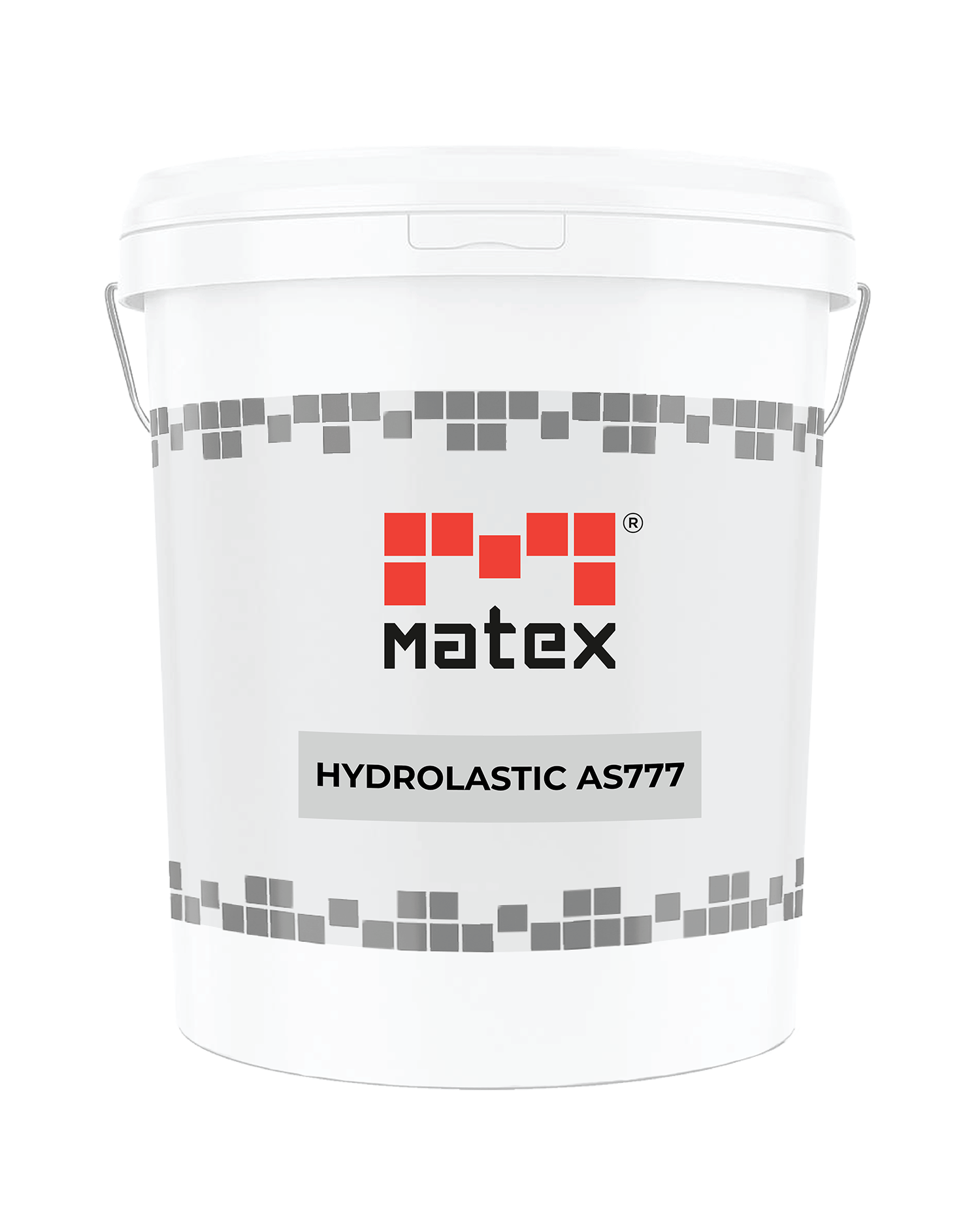
    Hydrolastic as777

    Flexible Acrylic Waterproof Protective Coating for Use Under Tiles and Natural Stone in Wet Areas

    HYDROLASTIC AS777 is a high-performance, single-component acrylic resin-based waterproofing membrane designed for indoor wall and floor applications. It is suitable for use on absorbent mineral surfaces as well as moisture-sensitive substrates, making it ideal for bathrooms, wet areas, and shower alcoves. The product is ready-to-use, non-toxic, and VOC compliant, offering a safe and environmentally friendly solution. It provides excellent flexibility, water resistance, and is capable of withstanding ponded water conditions. HYDROLASTIC AS777 can be easily applied using a roller, brush, or trowel, forming a seamless waterproof barrier that ensures long-lasting protection for indoor waterproofing requirements.


    Technical data:
    • Appearance : grey/red liquid coating
    • Application Temperature : 5°C to 40°C
    • Service Temperature : 5°C to 70°C
    • Touch Dry : Approx. 20 min
    • Overcoat : approx. 1 – 2 hours
    • Coverage : 1.1 kg per square meter @ 500 micron thickness
    • Packaging : 25 kg plastic pail

    How to Apply Hydrolastic as777

    Hydrolastic AS777 is a ready-to-use single-component coating applied in a minimum of two coats over a primed substrate, before tiling.

    1. Prepare the substrate. The substrate must be sound, clean, dry and free from loose material, efflorescence, laitance, curing compounds, dirt, oil, grease, mold and fungus. Concrete moisture content must not exceed 5%. Remove hard laitance mechanically (e.g. captive or sand blasting) and repair voids, cracks and blow holes with MATEX concrete repair products.
    2. Prime. Prime the surface with Armoprime AS acrylic resin dispersion primer before applying Hydrolastic AS777.
    3. Mix. Shake the closed pail, or mix slowly for 2-3 minutes with a paddle on a slow-speed drill until homogeneous.
    4. Apply the first coat and reinforce details. Apply a rich coat by roller or brush, preferably using the red color for the first coat. While it is still wet, embed reinforcing fabric over pipe culverts, floor drains, corner joints and floor/wall junctions, fully covered with material.
    5. Apply subsequent coats. When the first coat is dry, apply the following coat(s) in grey, preferably at right angles to the first. Minimum consumption is 1.1 kg/m² at 0.5 mm dry layer thickness; if the previous color shows through, the layer is too thin.
    6. Tile. Once fully cured, tile using a suitable tile adhesive for the tile type. On floating screed, leave at least 10 mm at the floor/wall connection with fiber reinforcement free from Hydrolastic AS777.
    7. Clean tools. Clean tools with water before the product hardens. Hardened material can only be removed mechanically.

    Summary of the method in the Hydrolastic as777 Technical Data Sheet. Always follow the full TDS on site.

    Standards & Test Methods

    StandardTitleReferenced for
    ASTM D4541Standard Test Method for Pull-Off Strength of Coatings Using Portable Adhesion TestersAdhesion to concrete (>1.5 N/mm²)
    ASTM D412Standard Test Methods for Vulcanized Rubber and Thermoplastic Elastomers—TensionListed in the TDS
    ASTM C1305Standard Test Method for Crack Bridging Ability of Liquid-Applied Waterproofing MembraneListed in the TDS
    ASTM D2240Standard Test Method for Rubber Property—Durometer HardnessListed in the TDS

    Standards and test methods as referenced in the Hydrolastic as777 Technical Data Sheet. Values in the TDS are typical laboratory results under standard conditions.

    Frequently Asked Questions

    What substrates can Hydrolastic AS777 be applied to?

    It is for indoor walls and floors on moisture-sensitive substrates such as plaster, gypsum fiberboard, plasterboard, wood chipboard and anhydrite screeds, and on absorbent mineral substrates such as concrete screeds, renders, aerated concrete and cement-based self-leveling compounds.

    What is the coverage of Hydrolastic AS777?

    Minimum consumption is approximately 1.1 kg/m² at 500 micron dry film thickness, applied in at least two coats.

    How long before Hydrolastic AS777 can be overcoated?

    It is touch dry in approximately 20 minutes, with an overcoat time of approximately 1-2 hours. Tiling can start once the coating is fully cured.

    Can Hydrolastic AS777 be used in swimming pools or immersed areas?

    No. The TDS states it is not to be used in permanently immersed or pressurized conditions. It is intended for wet areas such as bathrooms and shower alcoves.

    What is the shelf life of Hydrolastic AS777?

    Up to 6 months when stored in the original 25 kg pail in a covered, cool, dry place away from direct sunlight, heat and high humidity.

    Quick Contact