
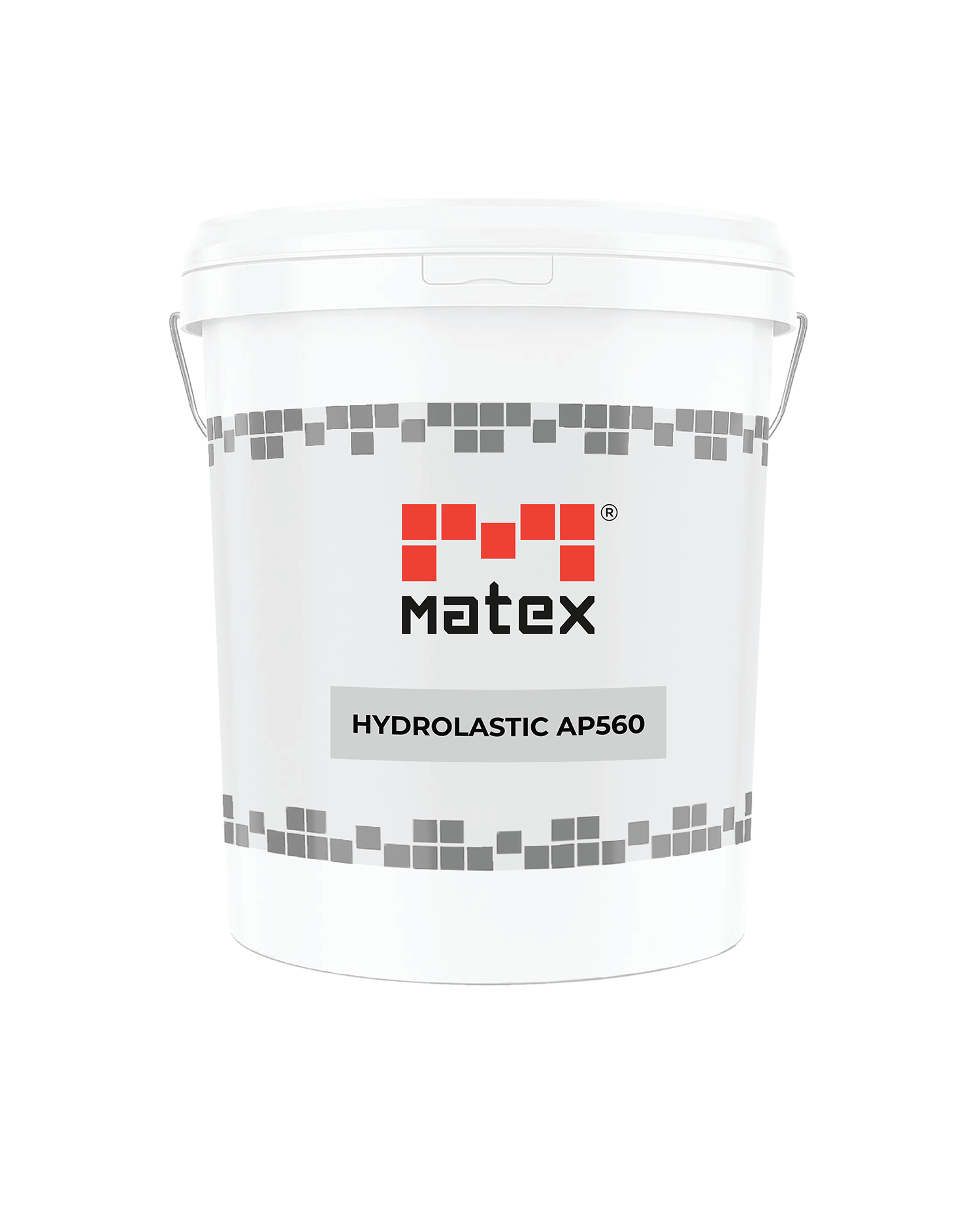
HYDROLASTIC AP560 is a cold-applied, one-component hybrid elastomeric waterproofing roof coating based on advanced polyurethane dispersion technology. Designed for tropical climates, it forms a highly elastic, seamless membrane offering outstanding protection against moisture and standing water. HYDROLASTIC AP560 is VOC compliant, non-toxic, and highly UV resistant, with excellent strength, elasticity, and low water uptake. It withstands extreme temperature fluctuations, resists ponded water conditions, and provides superior crack bridging. White roof applications can help reduce interior heat, improving energy efficiency. This flexible, high-performance membrane delivers exceptional durability even under low-temperature conditions.
Hydrolastic AP560 is applied cold in a minimum of two coats over a prepared, primed substrate.
Summary of the method in the Hydrolastic Ap560 Technical Data Sheet. Always follow the full TDS on site.
| Standard | Title | Referenced for |
|---|---|---|
| ASTM D412 | Standard Test Methods for Vulcanized Rubber and Thermoplastic Elastomers—Tension | Tensile strength (>1.5 N/mm²) and elongation (>400) |
| ASTM D2240 | Standard Test Method for Rubber Property—Durometer Hardness | Shore hardness (55) |
| ASTM C836 | Standard Specification for High Solids Content, Cold Liquid-Applied Elastomeric Waterproofing Membrane for Use with Separate Wearing Course | Listed in the TDS |
| EN 14891 | Liquid applied water impermeable products for use beneath ceramic tiling bonded with adhesives — Requirements, test methods, assessment and verification of constancy of performance, classification and marking | Listed in the TDS |
Standards and test methods as referenced in the Hydrolastic Ap560 Technical Data Sheet. Values in the TDS are typical laboratory results under standard conditions.
One 20 kg unit covers approximately 7.5–8.0 m² at 1.0 mm dry film thickness, applied in a minimum of 2 coats. Total thickness must not be less than 0.5 mm dft.
Each coat must be completely dry before the next is applied, which takes 6–8 hours at 25°C. Ponding water should be avoided for a minimum of 72 hours after application.
Ambient air and substrate temperature must be +8°C to +40°C with relative humidity of 80% max, and the surface must be at least +3°C above the dew point. Service temperature is -5°C to +80°C.
The TDS lists resistance to ponded water conditions, but states it should not be subjected to permanent water immersion.
Yes. It is a white coating with a Solar Reflection Index above 90 (E1980), and the TDS lists conformance with LEED SS Credit 7.2 (SRI > 78) and reflectivity requirements of Estidama and Dubai Green Buildings.