MATEX
Quick Contact
X

    Navigation
    Close menu
    Theme Color
    Light Dark

    Waterproofing

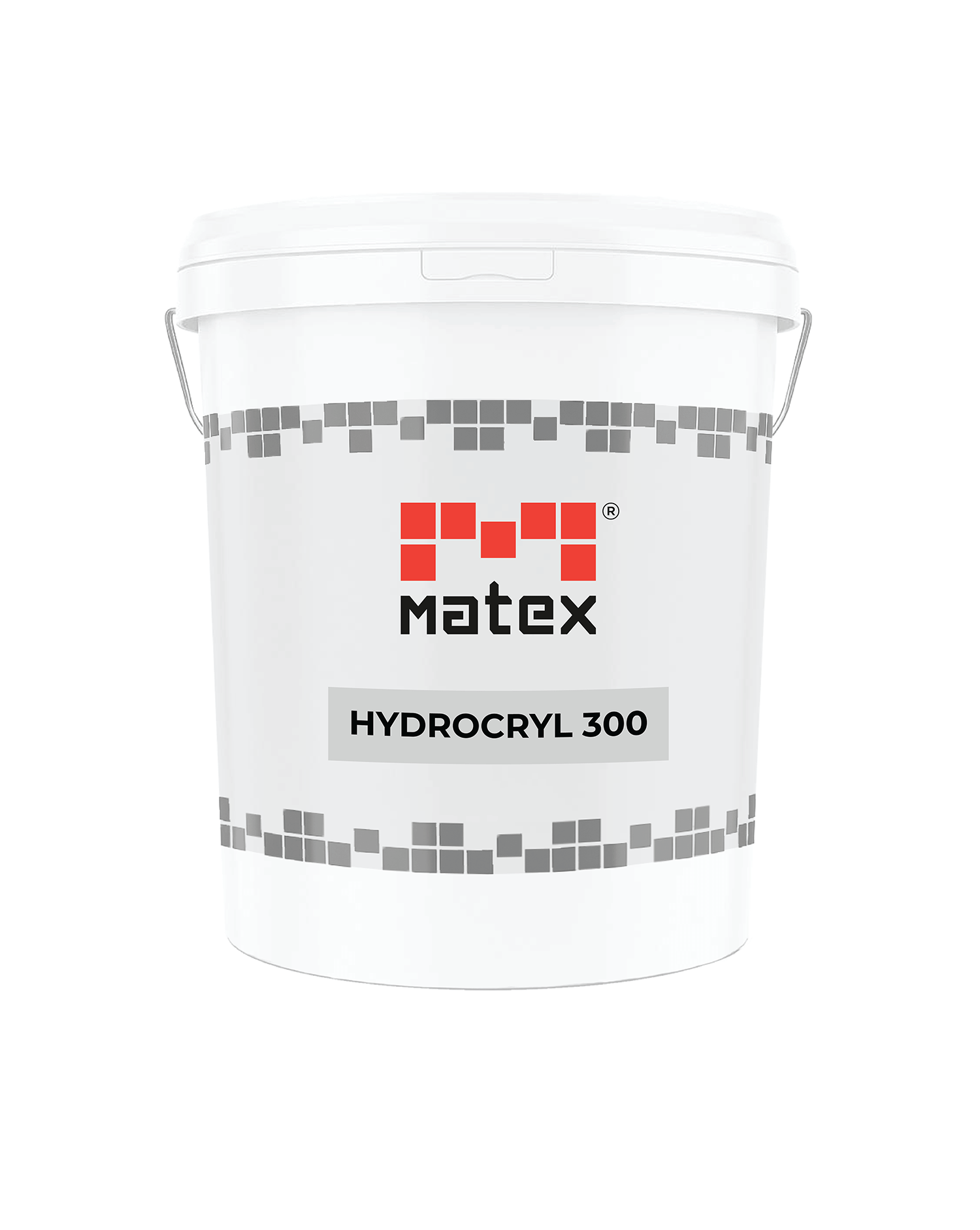
    Hydrocryl 300 flexible acrylic based waterproofing membrane by MATEX, 20 kg pail

    Hydrocryl 300

    Flexible Acrylic Based Waterproofing Membrane

    HYDROCRYL 300 is a single-component, elastomeric waterproofing membrane based on aliphatic acrylic resins, designed for flexible and long-lasting protection. It offers excellent resistance to weathering, UV exposure, and harsh environmental conditions while maintaining strong adhesion to a variety of substrates. Ideal for use on building roofs, hangar roofs, factories, warehouses, and metal sheds, HYDROCRYL 300 also serves as a reflective coating to help reduce heat buildup and the greenhouse effect. Water-based, low odor, and easy to apply, it is environmentally friendly and can be produced in a range of custom colors. Its semi-gloss finish enhances reflectivity, while its elastomeric properties deliver superior crack-bridging performance.


    Technical data:
    • Color : grey or white liquid
    • Touch dry : 8 hours
    • Service Temperature : 5 to 70°C
    • Application rate : 1.3 kg/m²/coat (500 micron)
    • Coverage : One pack covers approx. 15 m² per coat @ 500 micron thickness
    • Packaging : 20 kg plastic pail

    How to Apply Hydrocryl 300

    Hydrocryl 300 is a ready-to-use single-component membrane applied in a minimum of two coats over a sound, clean, dry substrate.

    1. Prepare the surface. All surfaces must be sound, clean, dry and free from loose material, efflorescence, laitance, curing compounds, dirt, oil and grease. Concrete must be cured for at least 28 days.
    2. Check the substrate type. Old bituminous roof membranes must be clean, free of de-bonding blisters and at least 4-6 months old. PU foam must be clean and free of dust and shaving residue, and steel should be prepared mechanically or by blasting.
    3. Mix. Shake the closed pail, or mix slowly for 3-5 minutes with a paddle on a slow-speed drill until homogeneous.
    4. Apply the first coat. Apply by roller, trowel, brush or spray at 1.30 kg/m² per coat (500 micron). On porous substrates or in very hot climates, dilute the first coat with 20% water.
    5. Embed reinforcement. For improved strength and flexibility, embed a 65 g/m² non-woven geotextile into the wet first coat, including at corner joints, fillets and pipe penetrations. Where movement and foot traffic are expected, embed a fiberglass mesh in the fresh first coat.
    6. Apply the second coat. Apply subsequent coats at the same rate, preferably at right angles to the first. A minimum of two coats at 500 microns each is required, fully covering any embedded mesh.
    7. Cure and protect. Allow 7 days for the coating to reach full properties. Avoid ponding water for a minimum of 72 hours after application.
    8. Clean tools. Clean tools with water before the product hardens. Hardened material can only be removed mechanically.

    Summary of the method in the Hydrocryl 300 Technical Data Sheet. Always follow the full TDS on site.

    Standards & Test Methods

    StandardTitleReferenced for
    ASTM D2240Standard Test Method for Rubber Property—Durometer HardnessShore A hardness (45)
    ASTM D412Standard Test Methods for Vulcanized Rubber and Thermoplastic Elastomers—TensionTensile strength (1.2 N/mm²) and elongation (>300%)
    BS EN 12390Testing hardened concreteWater penetration (nil)
    DIN 1048Testing methods for concrete (Prüfverfahren für Beton)Resistance to water pressure (>5 bar)
    EN 14891Liquid applied water impermeable products for use beneath ceramic tiling bonded with adhesives — Requirements, test methods, assessment and verification of constancy of performance, classification and markingListed in the TDS
    ASTM C1305Standard Test Method for Crack Bridging Ability of Liquid-Applied Waterproofing MembraneListed in the TDS

    Standards and test methods as referenced in the Hydrocryl 300 Technical Data Sheet. Values in the TDS are typical laboratory results under standard conditions.

    Frequently Asked Questions

    What surfaces can Hydrocryl 300 be applied to?

    Hydrocryl 300 adheres to concrete, plaster, masonry and metal. It can also be applied over old bituminous roof waterproofing (at least 4-6 months old) and as a top coat over PU foam roofing and EIFS systems.

    What is the coverage of Hydrocryl 300?

    The application rate is 1.30 kg/m² per coat at 500 microns. One 20 kg pail covers approximately 15 m² per coat at 500 micron dry film thickness, and a minimum of two coats is recommended.

    Can Hydrocryl 300 be used for permanently wet areas?

    No. Hydrocryl 300 should not be subjected to permanent water immersion, and prolonged water stagnation will soften the coating and cause it to peel. Ponding water must be avoided for at least 72 hours after application.

    What is the service temperature and drying time of Hydrocryl 300?

    The service temperature is 5 to 70°C. It is touch dry in 8 hours and needs 7 days to fully cure.

    What is the shelf life of Hydrocryl 300?

    Up to 12 months when stored in the original 20 kg pail in a covered, cool, dry place away from direct sunlight, heat and high humidity.

    Quick Contact